

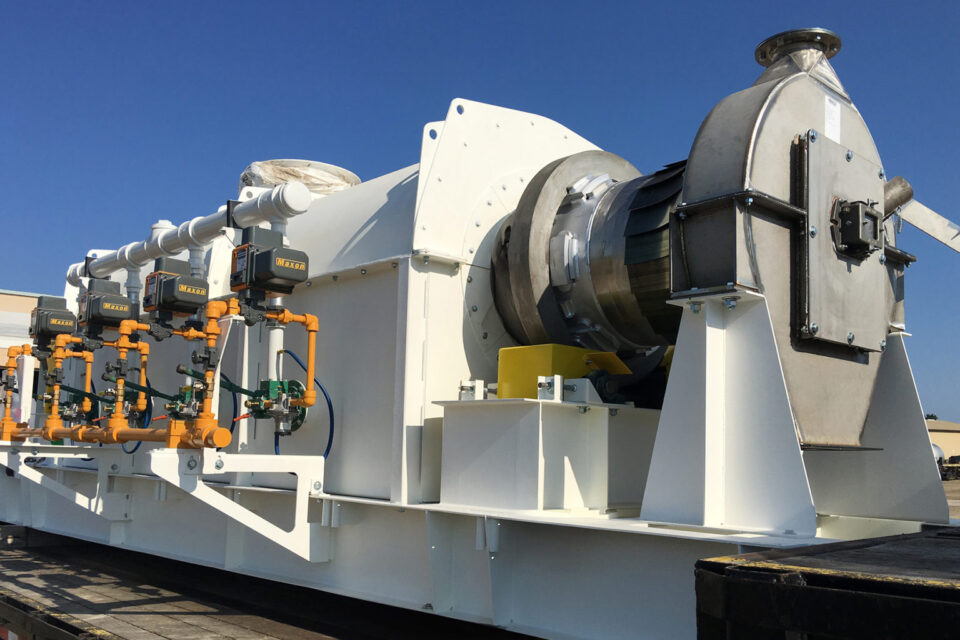
As demand for critical minerals—from nickel and lithium to graphite and rare earth elements (REEs)—continues to grow, Canada faces mounting pressure to secure reliable domestic supplies. Extracting these materials from both primary ores and secondary sources requires advanced, adaptable processing solutions. Among these, rotary kilns have emerged as an essential tool for efficient and scalable critical mineral recovery.


Meeting the Growing Demand for Critical Minerals
Critical minerals underpin technologies ranging from defense systems to electric vehicle batteries, with demand escalating alongside global population growth and technological advancement. Geopolitical challenges and limited conventional mineral sources have prompted producers to explore alternative feedstocks, including low-grade ores, industrial wastes, post-consumer products, and e-waste.
Processing these diverse materials requires precise thermal treatment—an area where rotary kilns excel. Their high-temperature, controlled environments allow chemical reactions and phase changes, enabling recovery of metals and other valuable components from challenging materials.
Why Rotary Kilns Are Key
Rotary kilns are versatile thermal processing systems used in reduction, calcination, and other material-specific transformations. Their flexible design, robust construction, and long-term reliability make them well-suited to both traditional ores and unconventional feedstocks. They can be configured as direct- or indirect-fired kilns, allowing precise control of temperature profiles along the kiln length for optimal reaction efficiency.
Applications in Critical Mineral Recovery
- Lithium from Spodumene
Spodumene, a lithium-rich ore, must first undergo decrepitation (alpha-to-beta phase conversion) to be suitable for downstream extraction. Rotary kilns provide the controlled thermal environment necessary to shatter the ore’s crystal structure for efficient lithium recovery. - Graphite and Advanced Carbon Materials
Natural and synthetic graphite, as well as other advanced carbon products like carbon black, activated carbon, and graphene, rely on high-temperature rotary kiln processing to purify, modify, and optimize material properties for use in battery anodes and industrial applications. - Rare Earth Elements (REEs) from Fly Ash
Fly ash from coal-fired power plants contains valuable REEs. Rotary kilns facilitate calcination or roasting, a critical step in extracting these elements from secondary sources, enabling new pathways for supply. - Red Mud
Bauxite residue, or red mud, contains iron, aluminum, titanium, and REEs. Rotary kilns can convert hematite to magnetite, enabling magnetic separation of iron and recovery of other metals. - End-of-Life Lithium-Ion Batteries
Rotary kilns provide the high-temperature environment needed to recover lithium, cobalt, nickel, copper, and aluminum while removing volatile organic compounds (VOCs). They are also essential for processing black mass, a mineral-rich intermediate from battery recycling. - Used Beverage Cans and Aluminum Scrap
Thermal decoating in rotary kilns oxidizes VOCs and removes coatings, oils, and lacquers from aluminum scrap, increasing recovery rates and safety while broadening the range of usable feedstock. - E-Waste
Rotary kilns can process electronic waste, including batteries and circuit boards, oxidizing VOCs and liberating valuable metals—a growing source of “urban mining.” - Spent Catalysts
Rotary kilns allow safe volatilization of organic compounds in spent catalysts, enabling recovery of cobalt, vanadium, nickel, and other metals from industrial catalysts.
Challenges and Custom Solutions
Each feedstock presents unique process demands. Pilot-scale testing in specialized facilities, such as the FEECO Innovation Center, is critical to establish optimal operating parameters like temperature, retention time, kiln slope, and speed.
Custom rotary kilns are designed with specific internals, inlet designs, and thermal atmospheres to ensure efficiency and durability. Robust construction is essential for handling abrasive and caustic materials over long operational periods.
Conclusion
As Canada positions itself as a leader in critical mineral supply, rotary kilns play a pivotal role in transforming raw resources into usable materials. From spodumene to REEs, graphite, aluminum, and e-waste, these advanced thermal treatment systems provide the versatility and reliability needed to meet growing industrial and clean energy demands. For modern mining and recycling operations, rotary kilns are more than equipment—they are a bridge from potential to production.