

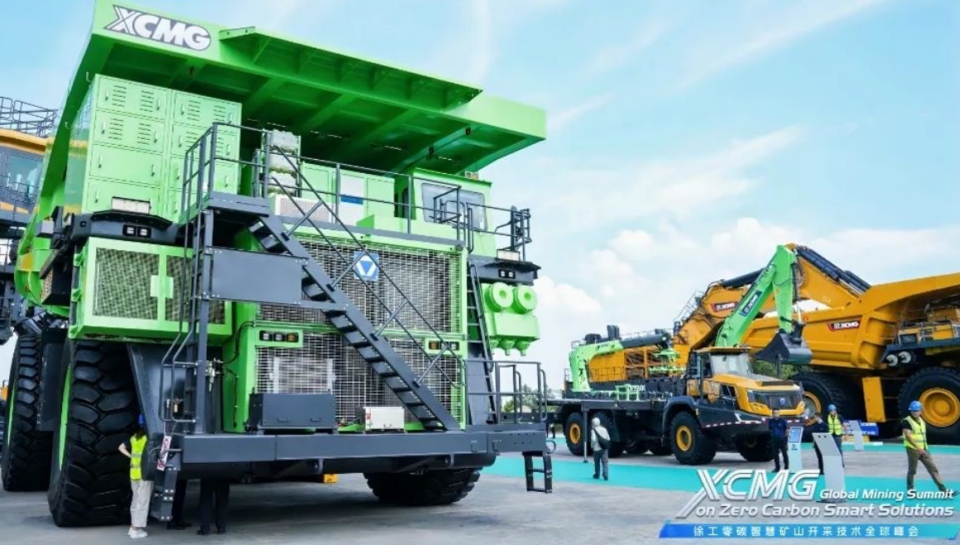
Battery-electric support equipment is emerging as a practical pathway for mining companies seeking to reduce emissions while maintaining operational efficiency.


As Australia’s mining sector accelerates its decarbonisation efforts, attention is increasingly extending beyond primary production machinery to the support fleets that keep mine sites operating safely and efficiently.
Haul trucks, excavators and other production equipment typically dominate electrification discussions because of their scale and contribution to material movement. However, essential activities such as haul road maintenance, dust suppression and access route management also present opportunities to reduce diesel consumption.
Graders, water trucks and other support machines play a critical role in maintaining productivity, although they often receive less attention in discussions about mining technology and emissions reduction.
XCMG is advancing its battery-electric mining equipment portfolio through an extensive validation programme at its facilities in Xuzhou, China. Four machines are undergoing comprehensive testing, including the XC9260BEWL battery-electric wheel loader, XC9260BEWD battery-electric wheel dozer, XDE150E battery-electric water truck and GR350EP battery-electric grader.
While the wheel loader and wheel dozer target production applications, the water truck and grader demonstrate how electrification can extend to essential support operations.
For mining companies, this offers another potential route towards lower-emission operations. Electrifying entire haulage fleets requires substantial capital investment, charging infrastructure and operational planning. Support equipment may provide additional opportunities for incremental progress, depending on site conditions, duty cycles and charging requirements.
Dust suppression is one application where battery-electric equipment could contribute to emissions reduction. Effective dust management is essential for maintaining air quality, visibility, workplace safety and regulatory compliance at Australian mine sites.
The XDE150E battery-electric water truck combines high-capacity water delivery with an electric drivetrain, potentially allowing operators to carry out routine dust suppression while reducing diesel-related emissions.
Similarly, the GR350EP battery-electric grader is designed for haul road maintenance, an ongoing activity that supports safe vehicle movement and efficient mining operations. Electrifying this type of equipment could help reduce emissions from tasks performed regularly across large mine sites.
However, the transition requires more than replacing a conventional engine with a battery. Battery performance, charging infrastructure, thermal management and machine control systems must operate together reliably under demanding conditions.
XCMG’s validation programme in Xuzhou allows engineers to assess machine performance under simulated operating conditions, including steep gradients, variable loads and continuous duty cycles. The testing is intended to evaluate equipment performance before deployment in the field.
For Australian mining operators, reliability remains a key consideration. Equipment operating in the Pilbara must withstand high temperatures, rough terrain and demanding production schedules. Battery-electric support machines will need to demonstrate consistent performance across extended operating shifts to meet these requirements.
Charging compatibility is another important factor. Operators must ensure that charging systems align with equipment requirements and that sufficient infrastructure is available to support daily operations without disrupting productivity.
Collaboration between manufacturers and mining companies will also be essential. Differences in site conditions, operating schedules and productivity targets mean that equipment must be assessed against the specific demands of each application. Development testing and operational feedback can help manufacturers refine machine performance and determine suitability for different mining environments.
The expansion of battery-electric technology into support fleets highlights the importance of a gradual, application-specific approach to mining decarbonisation. Alongside the electrification of major production assets, equipment such as water trucks and graders could provide additional opportunities to reduce diesel use while maintaining essential site operations.