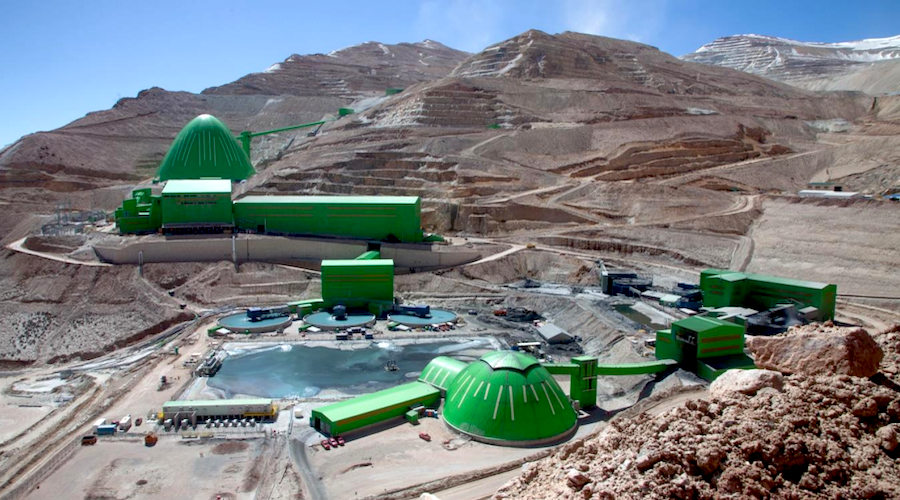
Canada’s Lundin Mining has applied for environmental approval in Chile for a $150 million project designed to optimise infrastructure and extend operating continuity at its Caserones copper-molybdenum mine through to 2039.
The application was submitted on 6 January to Chile’s Environmental Evaluation Service by the company’s local subsidiary, SCM Minera Lumina Copper. According to Lundin, the proposed project focuses on operational efficiencies and infrastructure improvements, without altering existing production limits or increasing freshwater consumption at the Atacama Region operation.
The move comes amid a surge in copper prices, which reached record levels of nearly $14,000 per tonne in London earlier this week. Elevated prices have intensified merger and acquisition activity across the sector, as miners increasingly adopt a “buy rather than build” strategy in response to rising development costs and a growing global copper supply deficit.
Located in the Tierra Amarilla commune, the Caserones mine is expected to produce between 127,000 tonnes and 133,000 tonnes of copper in 2026, in line with Lundin’s guidance.
Infrastructure optimisation and life extension
The proposed upgrade maintains the mine’s originally approved operating life, as well as its permitted input and output volumes established under the 2010 environmental licence. Planned works include the construction of new access roads, the addition of a freshwater reservoir, and the installation of two backup sulphuric acid storage tanks to ensure operational continuity.
Lundin also intends to expand leaching capacity by 90 million tonnes and extend operations at the solvent extraction and electrowinning (SX-EW) plant. The initiative represents the next phase of the Caserones operational adjustment programme, which received regulatory approval in 2025.
Growth strategy and top-ten ambitions
Lundin Mining is pursuing a strategy to rank among the world’s top ten copper producers, targeting annual production of approximately 500,000 tonnes of copper and 550,000 ounces of gold within the next three to five years.
This growth plan is anchored in brownfield expansions at Candelaria and Caserones in Chile, Chapada in Brazil, and new developments in the Vicuña district along the Chile–Argentina border, including the Josemaría and Filo del Sol projects.
Caserones is jointly owned by Lundin Mining (70%) and Japan’s JX Advanced Metals (30%). The operation processes around 84 million tonnes of ore per year, with milling capacity of 100,000 tonnes per day and the ability to produce up to 35,000 tonnes of copper cathode annually.
While Caserones remains a key asset within Lundin’s district-scale Vicuña strategy, declining ore grades in Chile are expected to reduce output by 2027 to between 105,000 and 115,000 tonnes per year. To support potential future expansion, Lundin significantly increased exploration activity around the mine, completing approximately 18 kilometres of drilling in 2025.