

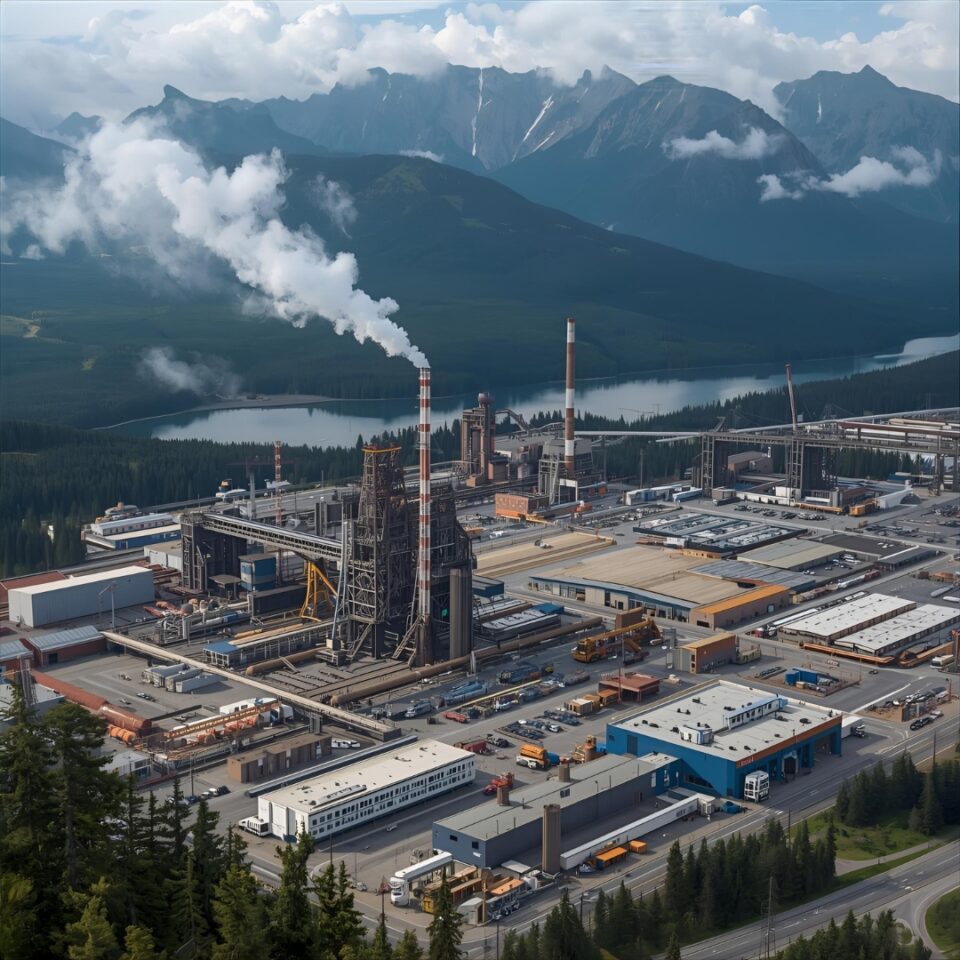
Global mining and commodities giant Glencore is reportedly considering shutting down its Horne Smelter in Quebec — Canada’s largest copper-metal producing plant — amid mounting environmental compliance costs and operational challenges, according to a report by Reuters.
The nearly 100-year-old facility, located in Rouyn-Noranda, processes copper concentrates to produce anode, which is then refined into cathode at Glencore’s nearby Canadian Copper Refinery (CCR) in Montreal. Together, the two sites form a critical link in North America’s copper supply chain.
Industry sources cited by Reuters estimate that the two operations collectively produce over 300,000 tonnes of copper annually, much of which is exported to the United States, a key market that relies heavily on Canadian copper imports.
Jobs and Modernisation Costs at Stake
A potential shutdown would affect around 1,000 workers across the Horne and CCR sites. According to estimates, keeping the facilities operational would require more than $200 million in environmental and modernization investments.
However, Glencore has denied any plans to close the operations. In response to Reuters’ inquiries, a company spokesperson acknowledged that “smelters globally are facing significant financial, regulatory, and operational pressure,” adding that Glencore’s Canadian assets “play an important role in the supply of critical raw materials for the North American market and abroad.”
Environmental and Market Pressures
The Horne Smelter has faced growing scrutiny in recent years over arsenic emissions, leading to a class-action lawsuit authorized by Quebec’s Supreme Court in 2020. Reuters noted that the current operational review is not directly related to the lawsuit, but rather to the high cost of achieving modern environmental standards.
Should the smelter close, analysts say it could tighten global copper supply, compounding shortages already emerging from production disruptions in Chile and Indonesia. Canada currently provides roughly 17% of U.S. copper imports, second only to Chile.
A Legacy of Innovation
Founded in the 1920s, the Horne facility has long been a symbol of Canadian metallurgical innovation. In 1980, it became one of the first in the world to recycle electronic scrap, pioneering a circular-economy approach decades before the term became mainstream.
Today, Glencore processes around 100,000 tonnes of discarded electronics annually, recovering valuable metals including copper, nickel, cobalt, gold, and silver.
Earlier this year, Glencore also divested from its Pasar copper refinery in the Philippines — a move seen by analysts as part of the company’s broader review of its global smelting portfolio.
As the global copper market tightens amid the clean energy transition, the fate of the Horne Smelter underscores a growing challenge for producers worldwide: balancing environmental sustainability with the economic realities of processing critical minerals.