

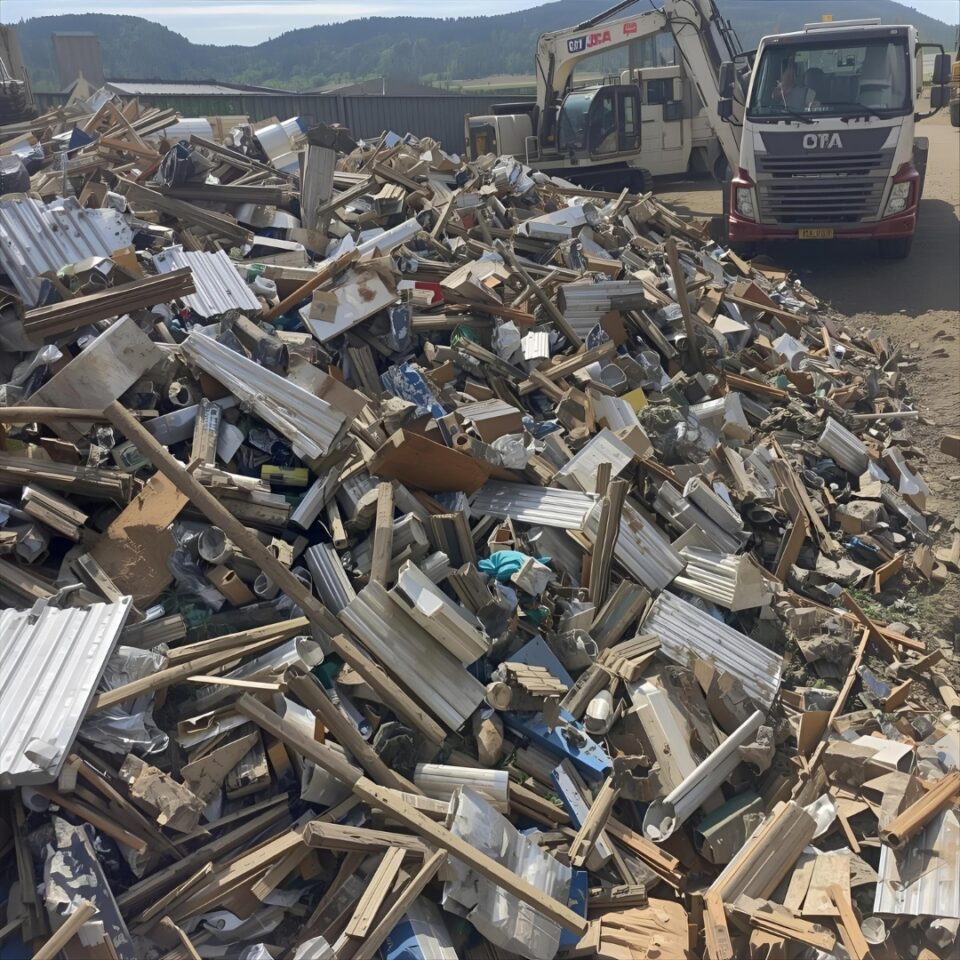
The global fight for control over critical minerals has now reached an unlikely battleground: aluminum scrap. Although not often viewed as a strategic asset, EU trade chief Maros Sefcovic describes aluminum scrap as exactly that — a vital commodity that Europe cannot afford to lose. More than one million metric tons of recyclable material leave the bloc each year, prompting the European Commission to prepare what it calls a “balanced measure” to keep more scrap within Europe’s borders.
Industry bodies are already pointing fingers. European Aluminium blames the United States, arguing that US import tariffs have created a price gap that is pulling large volumes of European scrap across the Atlantic. Meanwhile, the Aluminum Association in the US insists China is the real culprit and is calling for “smart, targeted export controls.” What is increasingly clear is that the global tug-of-war over aluminum scrap has officially begun.
Scrap metal has grown in strategic importance because it sits at the center of the EU’s industrial and climate strategy — linking circularity, decarbonisation and economic independence. The bloc aims to meet 25% of its critical mineral needs through recycling by 2030, and aluminum is already capable of playing that role. The metal is infinitely recyclable, and remelting it requires only 5% of the energy needed to produce primary aluminum, resulting in a far smaller carbon footprint. Its importance has risen even further as Europe’s primary smelting capacity has shrunk; annual production has fallen by a quarter since 2011, while 15% of European recycling furnace capacity now sits idle due to a lack of feedstock.
The US has accelerated this pressure. Aluminum scrap is exempt from the newly doubled 50% US import tariff on primary and semi-finished aluminum, creating an arbitrage opportunity that encourages European exports. US imports from Germany and Spain have increased, albeit from low levels, while Mexico and Canada remain America’s main suppliers. Broader data underscores the trend: consultancy Project Blue estimates that Europe’s scrap exports to non-EU destinations grew at nearly 9% annually between 2018 and 2024.
But not all scrap is equal. Both Europe and the US have long exported low-grade, end-of-life scrap due to shrinking domestic dismantling industries. China and India are major buyers, though China’s 2020 crackdown on low-grade material created new reprocessing hubs in Southeast Asia. The European Commission’s assurance that it will not impose a blanket export ban reflects the reality that Europe cannot currently process all grades it generates. Highly mixed grades such as “Zorba” and “Twitch” — often sourced from old vehicles — remain particularly difficult and costly to recycle at home.
Higher-value scrap, however, is a different story. Used beverage cans and other high-purity materials are in high demand, prompting the Aluminum Association to call for an immediate US ban on exports of such scrap outside North America. Despite Europe’s concerns, the United States still runs a trade deficit of around one million tons in aluminum scrap, with most outbound shipments heading to India, Thailand, and Malaysia — the main gateways for material feeding China’s recycling industry.
China’s growing appetite for secondary aluminum is reshaping the global landscape. After reversing its misguided “foreign garbage” ban, China has rapidly expanded its imports of recyclable aluminum. With primary smelters operating at the government’s capacity ceiling, the country is pushing hard into recycling and aims to lift aluminum recycling output to 15 million tons per year by 2027. This shift positions China to dominate the secondary aluminum market just as it already dominates the primary sector.
As Western countries grapple with rising dependence on imported critical minerals, aluminum scrap has quietly become one of their most valuable tools for reducing vulnerability. That reality is pushing both Europe and the United States toward some form of export restrictions, particularly for higher-grade scrap. But policymakers also recognise that legislation alone will not solve the problem. Public participation is essential: the US recycled just 43% of its aluminum beverage cans in 2023, far below the global average of 75% — a huge volume of high-quality metal effectively thrown away.
Trade measures may soon reshape global flows of aluminum scrap, but a major part of the solution lies at home, in stronger recycling systems and greater public awareness of the value of this unglamorous but strategically vital resource.