

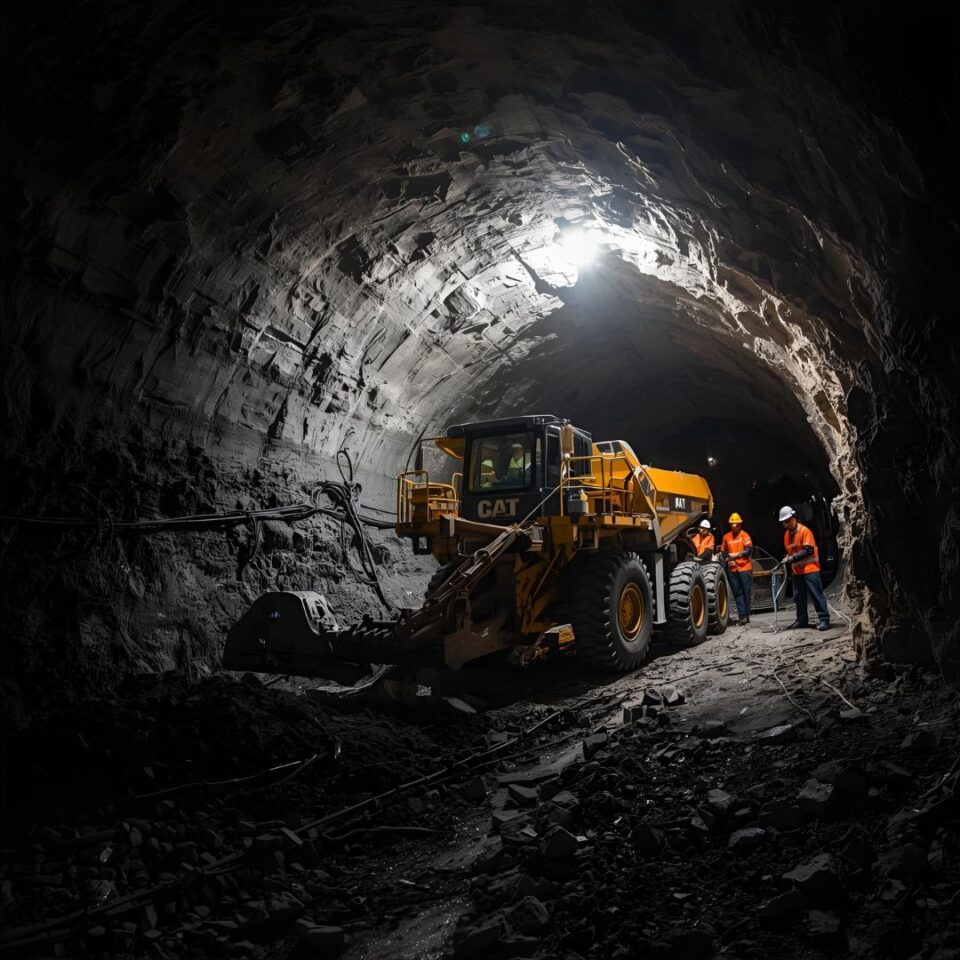
Kyrgyzstan has officially begun underground production at its flagship Kumtor gold mine, one of Central Asia’s largest bullion deposits, as the country seeks to extend the life of its most valuable state asset.
President Sadyr Japarov, who spearheaded the mine’s nationalization in 2021, confirmed that workers have already excavated 1,600 metres of underground tunnels. He said the new phase of development is expected to run for 17 years, adding 147 tonnes of geological reserves to the state balance sheet—equivalent to about 4.7 million ounces of gold.
At current market prices of more than $3,000 per ounce, the fresh reserves could be worth an estimated $14.2 billion.
Nationalization Boosts State Revenues
Kumtor was previously operated by Canada’s Centerra Gold (TSX: CG), before a protracted legal battle ended in a 2021 settlement. The deal saw Centerra exit Kyrgyzstan, ceding control of its largest mine to the government. Since then, Kumtor has delivered $3.4 billion in revenue to the Kyrgyz state, according to official figures.
Originally developed by Centerra in 1997, Kumtor remains a cornerstone of the national economy. Located about 50 kilometres from the Chinese border, the mine employs thousands and accounts for roughly 20% of Kyrgyzstan’s industrial output.
Beyond the Pit: Tailings Reprocessing
In addition to the new underground operations, the government plans to reprocess Kumtor’s massive tailings pond, which it claims holds over 100 tonnes of recoverable gold—potentially adding billions more to the country’s resource base.
Outlook
Despite output slipping to 12.6 tonnes in 2024 (from 13.6 tonnes a year earlier), authorities say the underground expansion and tailings reprocessing will help secure Kumtor’s future as a long-term engine of national growth and stability.