

Underground mining remains one of Volvo Penta’s most significant markets, where it commands a market share exceeding 30% in certain segments, despite strong competition from companies such as Deutz AG, Caterpillar Inc. / Perkins Engines Company Limited, Cummins Inc., and MTU Friedrichshafen.
The company’s strongest presence lies in underground load-and-haul applications, including LHDs and trucks, as well as utility vehicles. This growth has been achieved over a relatively short period through close collaboration with leading OEMs such as Sandvik, working directly at mine sites to refine engine performance for real-world conditions.
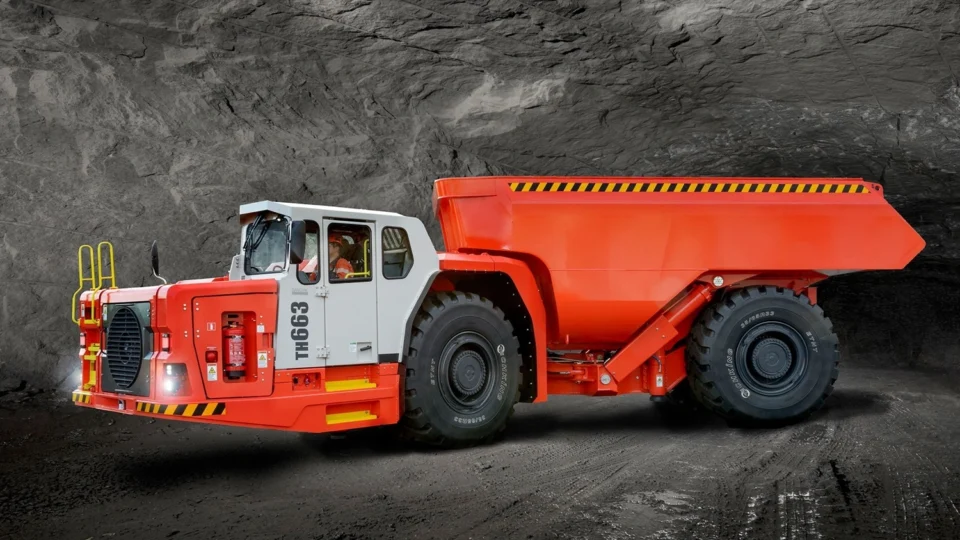
This collaboration led to the development of Stage V mining engines, including the TWD1683VE, used in Sandvik’s TH663i and TH551i trucks, and the TAD1385VE powering the TH545i. These engines build on proven Stage II/Tier 2 and Stage IV/Tier 4 Final platforms, incorporating advanced diesel particulate filter (DPF) technology. In the utility segment, key customers include Normet and MacLean Engineering.
Speaking at CONEXPO-CON/AGG 2026 in Las Vegas, David Hamilton, Head of Volvo Penta China and global mining market lead, highlighted the company’s focused strategy on sub-segment specialisation and customer engagement.
“We have invested heavily in understanding the specific needs of underground mining applications,” he said. “By working closely with OEMs, we ensure our engines are optimised for performance, uptime, and productivity in demanding environments.”
Tailor-made solutions for extreme conditions
Volvo Penta’s entry into underground mining around 15 years ago required significant adaptation. Engines originally designed for industrial or marine use had to be re-engineered to withstand harsh underground conditions, including humidity, temperature fluctuations, and varying air pressure.
Rather than offering standard products, the company worked closely with OEM partners like Sandvik to develop customised solutions based on real operational data—such as haul cycles, load variations, and engine-turbo interactions.
Hamilton described this process as “hardcore tailor-making,” involving upgrades to components such as valve drains, fuel lines, and wiring harnesses to meet mining durability standards. Early certification requirements, including those from CanmetMINING, also played a key role.
Today, Volvo Penta is the sole engine supplier for Sandvik’s load-and-haul equipment, a partnership that has strengthened both companies’ capabilities and market credibility.
Supporting the shift toward hybrid solutions
Volvo Penta has also supported the development of Sandvik’s latest 63-tonne diesel-electric trucks, contributing to engine behaviour optimisation, load cycle integration, and software alignment with electric drivetrains.
According to Hamilton, while fully electric mining equipment adoption has slowed in some areas, hybrid and diesel-electric solutions are gaining traction as practical transitional technologies offering immediate productivity gains.
Expanding presence in surface and global markets
Although underground mining remains its core focus, Volvo Penta is gradually expanding into surface mining applications, including drill rigs and quarrying equipment. Collaborations include projects with XCMG and engine integration into Sandvik’s Ranger DXi drill rigs.
The company is also active in mobile crushing and screening equipment through partnerships with OEMs such as Metso, McCloskey International, Keestrack, Lippmann Milwaukee, and Pilot Crushtec.
Growth driven by Chinese OEM partnerships
China is emerging as a key growth market, with Volvo Penta working closely with leading underground OEMs such as Fambition, whose equipment is deployed globally across regions including Latin America and Europe.
Fambition’s fleet—including the FL105+, F18 and F14 LHDs, as well as FT45 and FT30 trucks—is powered by Volvo Penta engines. Additional partnerships include Yantai Xingye, Jiangxi Siton, and LGMRT, reflecting the rapid maturation of China’s underground mining equipment sector.
Notably, all engines supplied to Chinese OEMs are currently manufactured in Europe, underscoring the emphasis on performance and quality.
Looking ahead: electrification and innovation
Volvo Penta is now developing complete electric driveline solutions for underground mining, building on its experience in marine and off-highway applications. Future production is expected to involve both in-house development and partnerships, particularly leveraging China’s leadership in battery and electric motor technologies.
“Mining is a core and growing market for us,” Hamilton concluded. “If an engine performs reliably underground, it proves its durability anywhere—making mining the ultimate benchmark for quality.”