










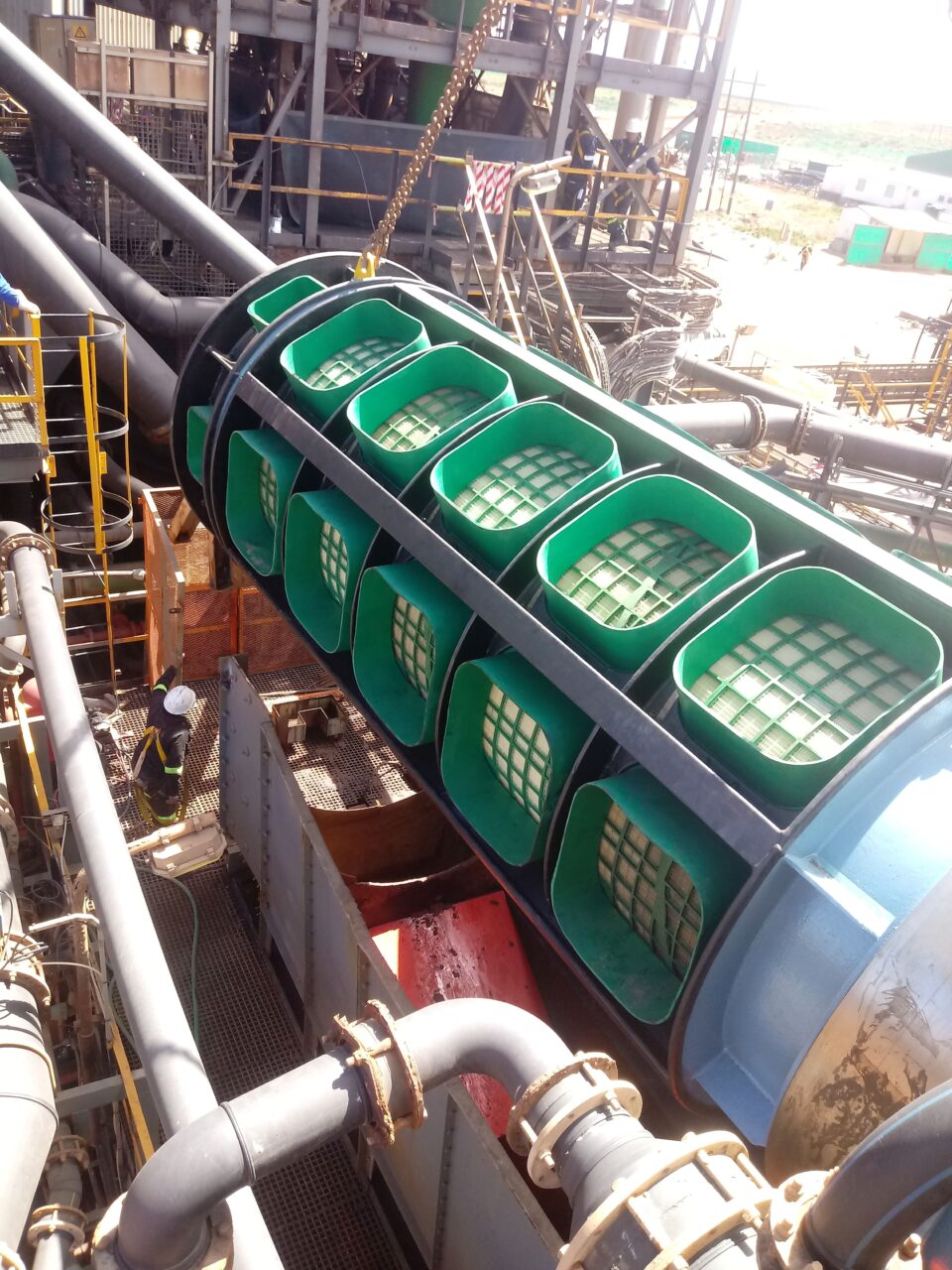
Trommel screens play a critical role in mineral processing operations, yet they are often overlooked in discussions around plant performance and efficiency. At its core, a trommel screen enables the separation of feed material by size, ensuring that downstream processes receive correctly classified material. While the operating principle is straightforward, achieving consistent performance requires careful consideration of design, materials of construction and application-specific conditions.

“A trommel does not rely on force or complexity to do its job. Its strength lies in consistency,” explains Denzyl Macauley, Screening Support Manager at Multotec. “Every rotation contributes to a controlled and repeatable separation process, supporting steady plant performance.”
A well-established technology, continuously refined
The concept of screening material by size dates back centuries, with early civilisations using basic sieves for mineral recovery and agricultural processing. The introduction of rotating cylindrical screens during the 19th century gold rush era marked a significant advancement, allowing continuous processing of large volumes of material.
Since then, trommel technology has evolved to meet the demands of modern mining. Improvements in construction materials, drive systems, and screening media have enabled higher throughput, increased durability, and more efficient operation under demanding conditions.
“What has remained constant is the principle of separation,” Macauley notes. “What has changed is how We engineer trommels to perform reliably in high-capacity and high-wear environments.”
No two applications are the same
Trommel screens are used across a wide range of applications, from Grinding Mill discharge stream screening to primary screening in Heavy Mineral Sands operations. Each application presents unique challenges in terms of feed characteristics, throughput requirements, and wear conditions.
“There is no standard trommel design that fits all operations,” Macauley explains. “Each unit must be engineered based on actual process conditions, including feed particle size distribution, material abrasiveness, and required cut points.”
Multotec has been supplying trommel screens since the late1990s, initially focusing on mill-mounted units installed on grinding mills. These trommels are critical in controlling the transfer of material between milling and downstream processes, directly influencing circuit efficiency.
As mill sizes have increased, so too have the size and complexity of trommel screens. Screening media followed to evolve from woven wire to polyurethane modular panels, with large diameter units now utilising heavy-duty rubber panels to withstand high-impact and abrasive conditions.
Self-driven trommels
Multotec supplied its first self-driven trommel in the during 2000 to Hillendale in KwaZulu-Natal. These standalone units are now widely used as primary screening equipment, particularly in heavy mineral sands operations.
Self-driven trommels offer flexibility in plant design and can be tailored to suit a range of operational requirements. Units typically range from approximately 1 metre to over 3 metres in diameter and can exceed 15 metres in length.
“These units are designed to handle high volumes of material while maintaining efficient separation,” says Macauley. “Their application in mineral sands operations highlights their ability to perform reliably in continuous, high-throughput environments.”
Designing for durability and performance
Trommel screens operate in demanding conditions, where continuous material flow, high wear rates, and variable feed characteristics place significant strain on equipment. To address this, Multotec applies a detailed engineering approach to trommel design. Process parameters are used to determine sizing and configuration, while structural integrity is validated through Finite Element Analysis (FEA).
“We design trommels for long-term operation, not just initial performance,” Macauley explains. “Factors such as fatigue life, wear, and material behaviour over time are critical to ensuring long term reliability and minimising downtime.”
Screening media selection is equally important. Material choice, whether polyurethane, rubber, or steel, must align with the specific application to achieve the desired balance between wear life and screening efficiency.
Manufacturing capability and scalability
Multotec’s ability to support a wide range of trommel applications is underpinned by its manufacturing capability.
Multotec South Africa produces more than 17,000 m² of screening media per month, covering a range of materials including steel, polyurethane, and rubber. This capacity enables both large-scale production and the flexibility to accommodate customised designs.
“The challenge is maintaining consistency at scale while still responding to site-specific requirements,” Macauley says. “Our manufacturing processes are designed to support both.”
Advanced capabilities such as rapid prototyping and mould development further enhance the company’s ability to deliver fit-for-purpose solutions within acceptable lead times.
Learning from operational experience
Over decades of supplying trommel screens, Multotec has developed a strong understanding of how design choices impact performance in the field. In some cases, incorrect material selection or design configurations have led to suboptimal performance. These experiences have informed continuous improvements in screening media, internal scroll design, and overall trommel configuration.
“Understanding where designs fall short is just as important as understanding where they succeed,” Macauley notes. “That feedback allows us to refine and improve our solutions over time.”
Key learnings include the use of heavy-duty rubber panels for large diameter mill-mounted trommels, the effectiveness of polyurethane panels in mineral sands applications, and the importance of optimised internal designs to improve material flow and reduce blockages.
Supporting long-term operational performance
Trommel screens are long-life assets, and their performance is closely linked to both design and ongoing maintenance.
Multotec continues to support customers through refurbishment, optimisation, and technical guidance to extend equipment lifespan and maintain performance. A recent enquiry from Multotec Brazil for the refurbishment of trommel frames supplied in 2008 highlights the durability of well-designed equipment.
“When trommels are correctly specified and maintained, they can operate reliably for many years,” Macauley concludes. “That long-term performance is what ultimately delivers value to our customers.”
A critical, yet often overlooked component
While trommel screens may not be the most visible equipment on a plant, their impact on process efficiency is significant.
Ensuring the correct design, material selection, and specific application of trommel screens allows operations to maintain consistent throughput, reduce downtime, and improve overall plant performance.
In an industry focused on optimisation and sustainability, these systems remain a critical part of the broader minerals processing value chain, quietly turning, separating, and supporting efficient operations every day.