

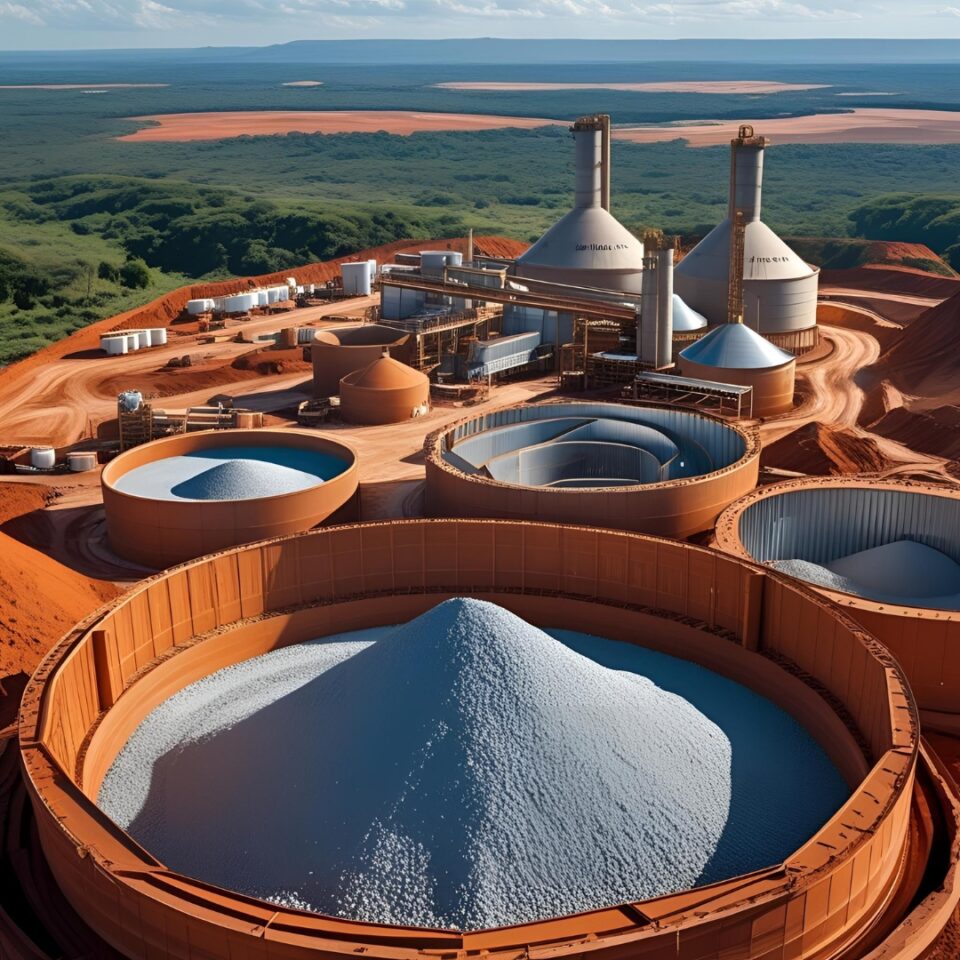
The Kasiya Rutile Project, spearheaded by Sovereign Metals, is redefining Malawi’s role in the global mining industry. Located just 35 km northwest of Lilongwe, the nation’s capital, Kasiya has emerged as one of Africa’s most significant mineral discoveries in recent years, boasting exceptionally high-grade natural rutile (TiO₂) alongside graphite as a valuable by-product. Its scale, grade, and strategic location give it the potential to transform both Malawi’s economy and international titanium supply chains.
What sets Kasiya apart is not only the quality of its resource but also its infrastructure advantages. Unlike many African mining projects that require heavy infrastructure investment, Kasiya benefits from established road and rail connections, direct access to the Nacala deep-water port in Mozambique, reliable power from Malawi’s national grid, and abundant water resources. These factors reduce complexity and capital requirements, giving the project a clear competitive edge.
The global rutile market is facing a deepening supply deficit, with natural rutile production declining by 45% since 2010 and few new projects in the pipeline. Meanwhile, demand continues to climb, driven by aerospace, defense, medical, and industrial applications. Kasiya’s entry into this landscape is timely, particularly as Western nations prioritize critical mineral security and diversify away from vulnerable supply chains. Recent geopolitical shifts, including tariffs on South African mineral sands, have only reinforced the strategic value of stable, Western-aligned jurisdictions such as Malawi.
Kasiya’s resource base is truly world-class. With 2.1 billion tonnes of ore grading around 1% rutile and 1.3% graphite, the deposit contains more than 21 million tonnes of rutile and 28 million tonnes of graphite. This positions it to become the largest natural rutile producer globally while also contributing substantially to the graphite market. Its metallurgical characteristics add further appeal: the ore is free-dig saprolite requiring no blasting, the processing flowsheet is simple and chemical-light, and the final rutile product meets premium specifications for high-grade titanium metal and pigment markets.
Economically, the project is equally compelling. Sovereign Metals’ pre-feasibility study outlines a pre-tax NPV of US$2.3 billion, a post-tax IRR of 28.3%, and an operating margin of 64%. With projected annual EBITDA of US$415 million and a payback period of less than three years, Kasiya ranks among the most attractive mineral projects globally. Its dual-commodity profile further strengthens resilience, as graphite revenues complement rutile sales.
The project also emphasizes sustainable development. With a design that minimizes land disturbance, eliminates chemical use in processing, and relies on rail for low-carbon logistics, Kasiya is positioned to meet growing ESG expectations. Sovereign Metals has implemented community programs covering education, healthcare, agriculture, and infrastructure, ensuring local populations share in the project’s benefits while building long-term social license to operate.
The involvement of Rio Tinto adds further weight, providing technical expertise, financial strength, and credibility that significantly de-risk development. Their partnership has accelerated timelines, with a definitive feasibility study due in late 2025 and first production targeted around 2028–2029—perfectly timed to meet tightening global supply.
While financing challenges persist in today’s high-interest environment, Kasiya’s strong economics and strategic importance offer clear advantages in securing investment. The project aligns seamlessly with Malawi’s national strategy to diversify beyond agriculture, attract foreign investment, and build a foundation for sustainable economic growth.
Ultimately, Kasiya is more than a mining project; it is a catalyst for reshaping Malawi’s development trajectory and securing a critical position in the global titanium and graphite supply chains. Its combination of resource scale, strategic timing, and responsible development positions it as a landmark project not just for Sovereign Metals, but for Africa’s future role in critical minerals.