

Safe Crossing of a Water-Bearing Regional Fault
By Weber Mining & Tunnelling on Published:08 June 2026
https://weber-mining.com/
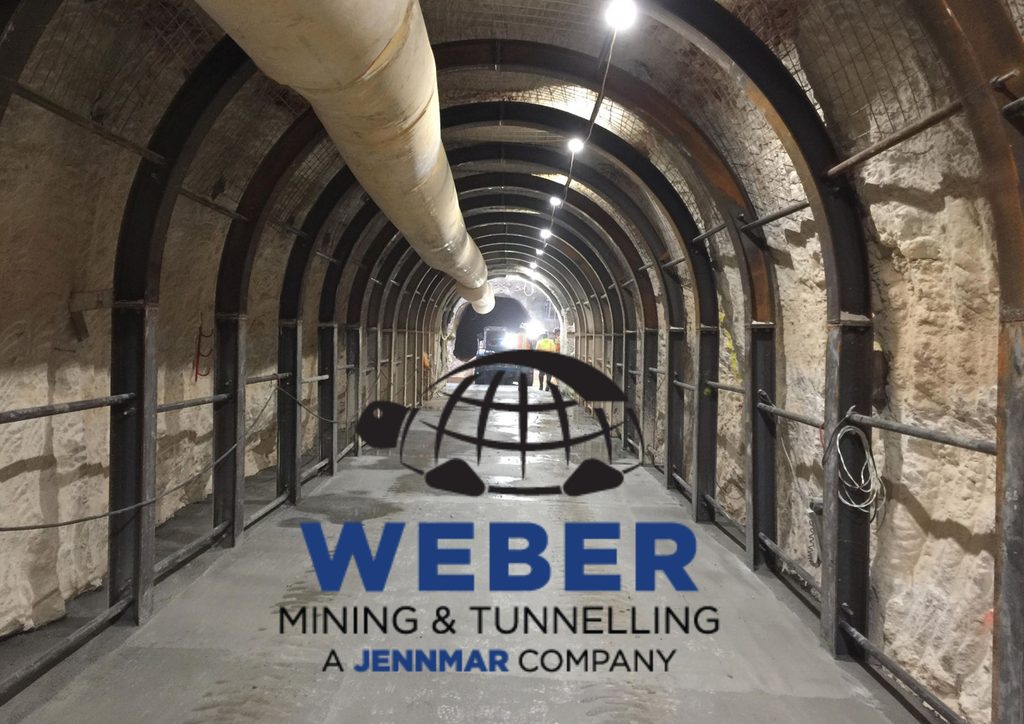
Crossing a wide, water-bearing regional fault is a major challenge in mechanized underground excavation. This case study shows how preventive ground consolidation enabled a silver mine to safely and continuously cross a fault zone where previous developments had stalled and collapsed.
Working on a 5.0 m × 4.5 m access drift, the team began spiling-type resin injections approximately 21 m ahead of the anticipated fault. A combination of crown and rib boreholes at staggered lengths provided deep, intermediate and near-face reinforcement. Self-drilling anchors served both as permanent reinforcement and as a pathway for resin injection, creating a strengthened composite ground structure.
Marisil® E, a two-component elastic resin, was selected for its rapid four-minute reaction time, strong adhesion, non-foaming properties and ability to react effectively in wet conditions. Injection was carried out progressively, with the process adjusted according to pressure, resin consumption, water behaviour and visible resin returns.
The fault was ultimately found to be up to 5 m thick—significantly wider than the predicted 1–2 m. Despite this, the mine crossed the structure without major incidents. Advance rates improved from as little as 1 m/day in untreated ground to around 3 m/day following consolidation, while overbreak remained controlled and water inflows were managed.
The results demonstrate how combining chemical ground consolidation with mechanical reinforcement can improve safety, productivity and continuity when excavating through challenging faulted ground.
Download the white paper to learn more.